Spiritomb STANDARD PSA 10
M1L Promo · Japanese Print · Card #071
Currently Sourcing from Japan
All slabs cert-verified. Payment held until we confirm your slab. SF Express 1-2 days (HK) · DHL Express 3-5 days international.
Japanese version
PrimaryNo Japanese slabs in stock yet
We source Japanese PSA 10 copies separately — typical turnaround 7–14 days once someone requests this language.
Card Background & Set Context
Spiritomb debuted in Pokemon Diamond/Pearl (2006/2007) with the unique design of a ghostly entity bound within an Odd Keystone. Its 108-spirit lore (referencing 108 evil spirits in the keystone) gave it cult-favourite status among players drawn to dark Pokemon design themes. Spiritomb saw competitive use in DPP-era formats due to its dual ghost/dark typing creating no-weakness coverage at the time. M1L promo distribution likely positions this Spiritomb as part of an Sinnoh-era commemoration or ghost-type-focused distribution.
Investment Analysis
Spiritomb prints across Pokemon TCG history occupy niche-collector territory — strong demand within ghost-type and dark-type subset collectors but limited mainstream appeal. M1L promo Spiritomb trades estimated US$8-20 raw with PSA 10 multipliers in the 2-3x range. The card benefits from (1) ghost-type completion demand, (2) Generation IV nostalgia building, (3) Spiritomb-specific cult appeal from its lore-rich design. Long-term thesis: niche-subtype Pokemon like Spiritomb appreciate steadily within their collector subsegments but rarely break into mainstream price tiers; the M1L promo distribution adds scarcity premium versus main-set Spiritomb prints.
Risks to Watch
Risks include: (1) Spiritomb's niche-subtype appeal caps mainstream demand growth ceiling, (2) Generation IV Pokemon are entering the post-anime nostalgia gap, (3) reprint pressure from any future ghost-type-focused collection, (4) JPY/HKD FX exposure. The ghost/dark subtype completionist base provides stable defensive moat; broader appreciation depends on cycle-driven Generation IV nostalgia rebuild.
Global Market Comparison
No sold-comp history yet for this card. Our price above reflects our own sourcing + margin; region benchmarks will populate as we ingest more data.
Card Background & Set Context
Spiritomb debuted in Pokemon Diamond/Pearl (2006/2007) with the unique design of a ghostly entity bound within an Odd Keystone. Its 108-spirit lore (referencing 108 evil spirits in the keystone) gave it cult-favourite status among players drawn to dark Pokemon design themes. Spiritomb saw competitive use in DPP-era formats due to its dual ghost/dark typing creating no-weakness coverage at the time. M1L promo distribution likely positions this Spiritomb as part of an Sinnoh-era commemoration or ghost-type-focused distribution.
Investment Analysis
Spiritomb prints across Pokemon TCG history occupy niche-collector territory — strong demand within ghost-type and dark-type subset collectors but limited mainstream appeal. M1L promo Spiritomb trades estimated US$8-20 raw with PSA 10 multipliers in the 2-3x range. The card benefits from (1) ghost-type completion demand, (2) Generation IV nostalgia building, (3) Spiritomb-specific cult appeal from its lore-rich design. Long-term thesis: niche-subtype Pokemon like Spiritomb appreciate steadily within their collector subsegments but rarely break into mainstream price tiers; the M1L promo distribution adds scarcity premium versus main-set Spiritomb prints.
Japanese vs English & Variants
Within M1L promo distribution, Spiritomb at 071 sits among Generation IV-era Pokemon promo inclusions. Comparison with Spiritomb prints from main-set releases — Diamond/Pearl-era originals, BW reprints, and various SwSh-era inclusions — shows that promo Spiritombs typically distinguish through stamping or distribution context. The card's ghost/dark dual typing limits its evolution-line collection breadth but enhances subtype-completion appeal.
Authentication & Cert Verification
Promo Spiritomb cards face moderate counterfeit risk. Verify: (1) M1L promo stamping matches authentic Pokemon Co. distribution channels, (2) card stock matches modern era-appropriate JP production, (3) print quality on Spiritomb's intricate spirit-stone artwork shows native high-density printing, (4) any holo or foil treatment uses era-correct patterns. Provenance from confirmed M1L distribution events adds verification weight.
Risks to Watch
Risks include: (1) Spiritomb's niche-subtype appeal caps mainstream demand growth ceiling, (2) Generation IV Pokemon are entering the post-anime nostalgia gap, (3) reprint pressure from any future ghost-type-focused collection, (4) JPY/HKD FX exposure. The ghost/dark subtype completionist base provides stable defensive moat; broader appreciation depends on cycle-driven Generation IV nostalgia rebuild.
Frequently Asked Questions
Background reading: general FAQ · how Poke10 sources · shipping & duties · all sets
What is Spiritomb's lore?
A spectral Pokemon formed by 108 spirits bound within an Odd Keystone, debuting in Generation IV with strong cult-favourite design appeal.
Is this competitive?
Spiritomb saw historical competitive use in DPP-era formats; in current SV-era standard, competitive utility is minimal.
What's the English equivalent?
M1L is JP-track; English Mega-era promo distributions use distinct numbering and stamping conventions.
Should I grade this card?
For centred near-mint copies with confirmed M1L provenance, yes — niche-subtype demand supports grading-fee economics.
How does this compare to other ghost-type promos?
Spiritomb sits in the niche-subtype tier; ghost-type completionists drive demand but mainstream collector pull is modest versus headline ghost Pokemon (Gengar, Mimikyu).
More from M1L Promo
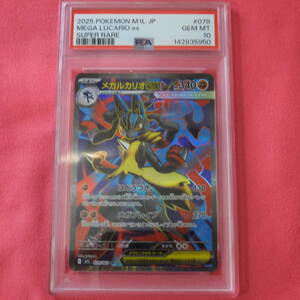
MEGA LUCARIO ex
m1l · #078 · Japanese
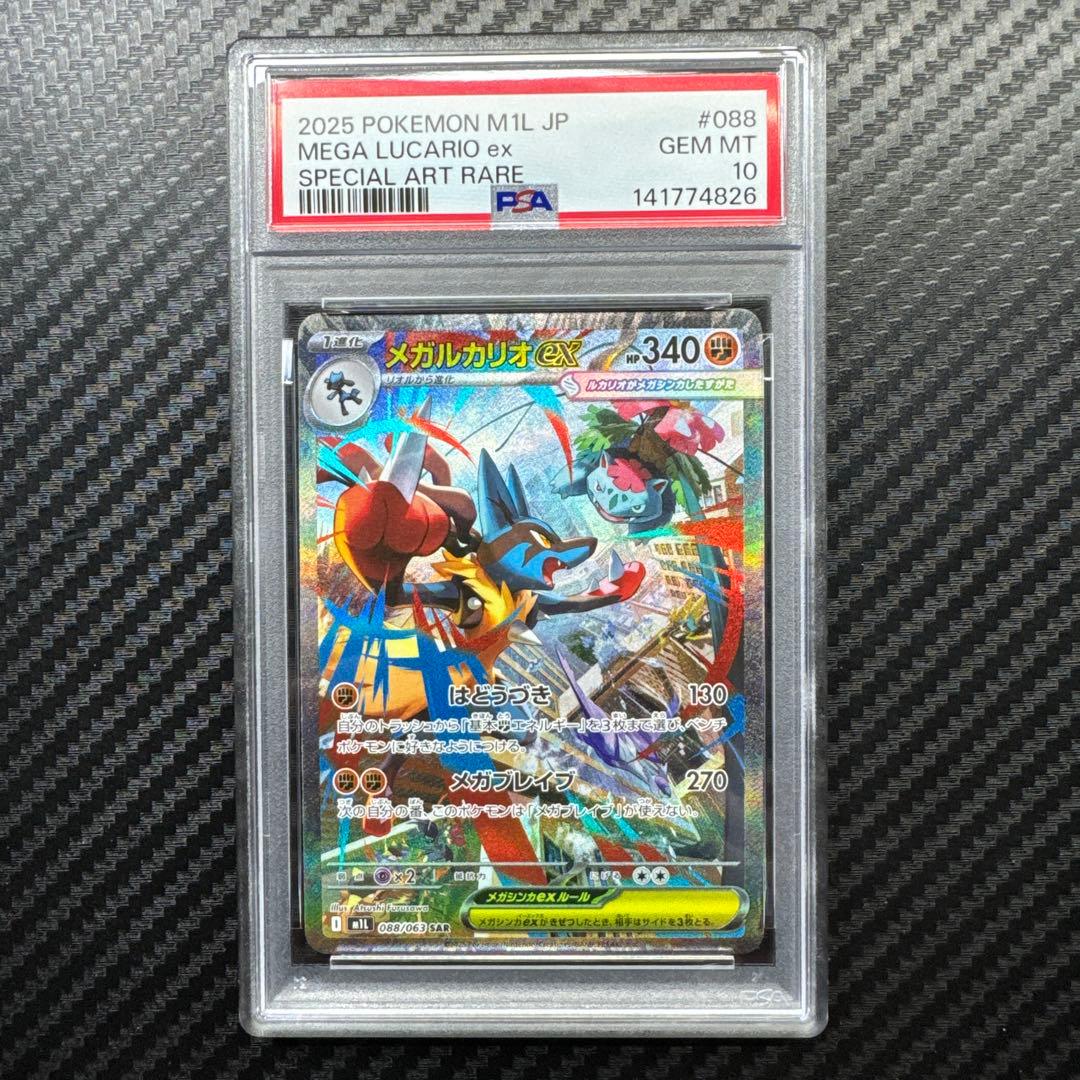
MEGA LUCARIO ex
m1l · #088 · Japanese
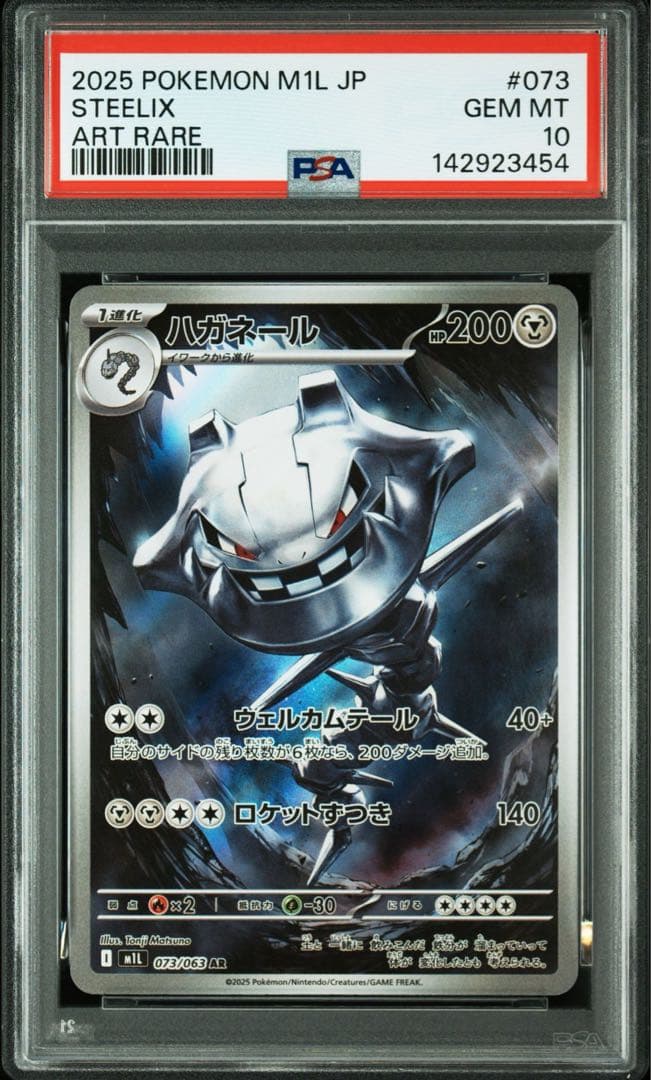
STEELIX
m1l · #073 · Japanese
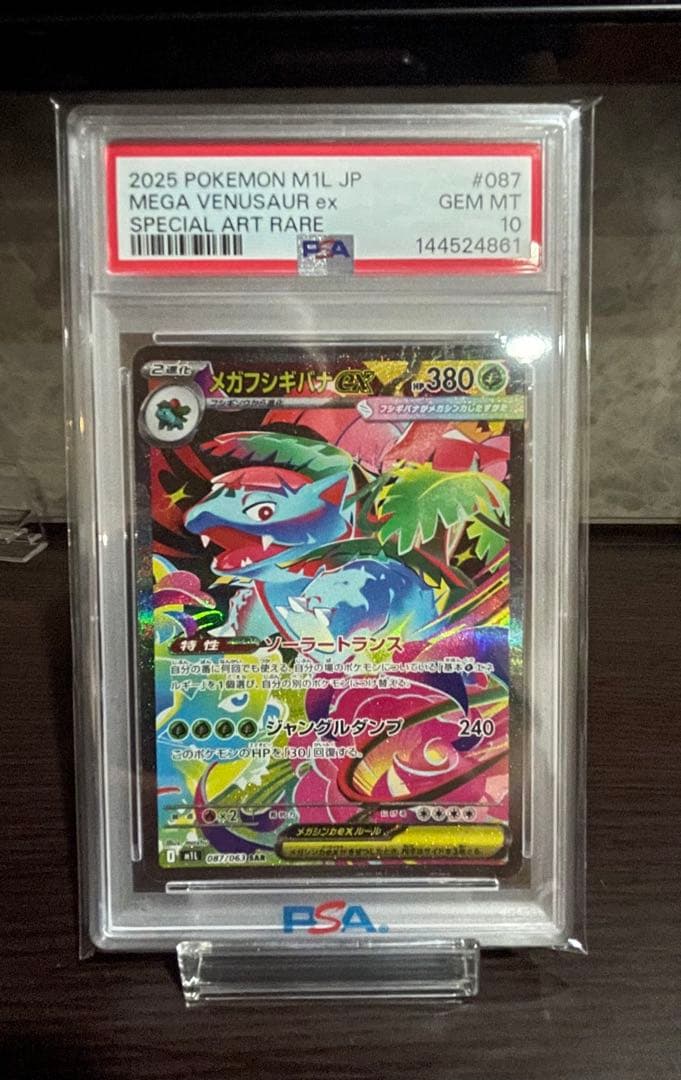
MEGA VENUSAUR ex
m1l · #087 · Japanese
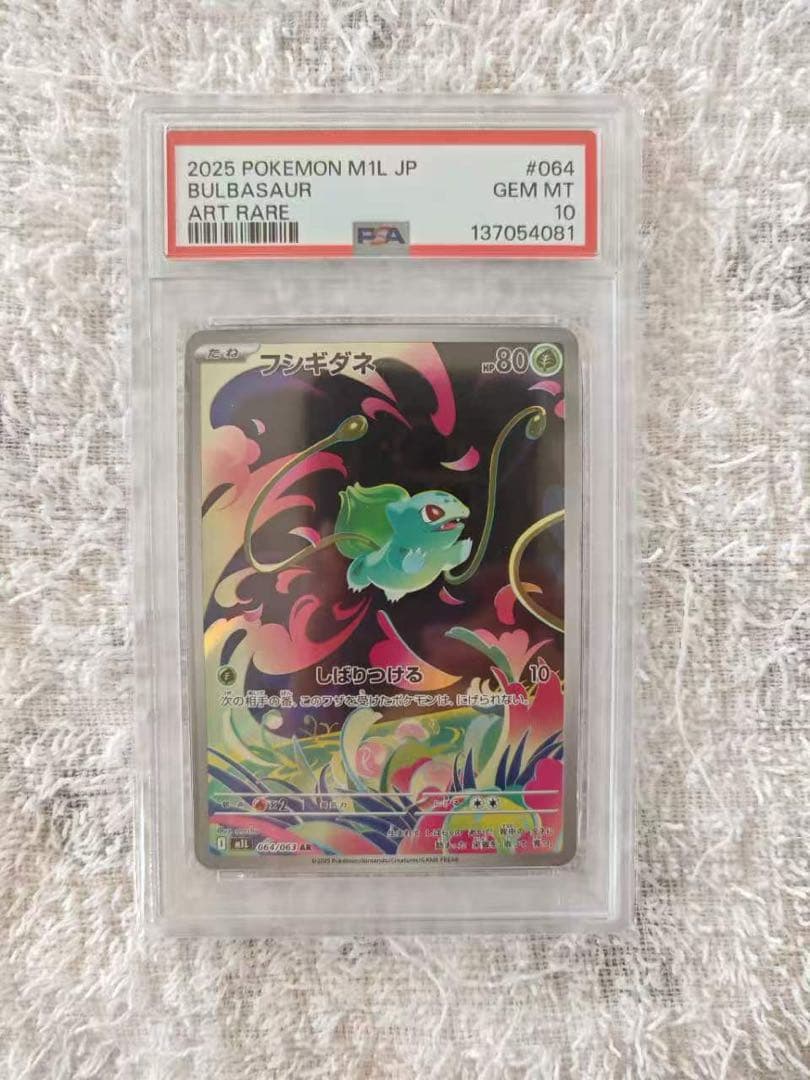
BULBASAUR
m1l · #064 · Japanese
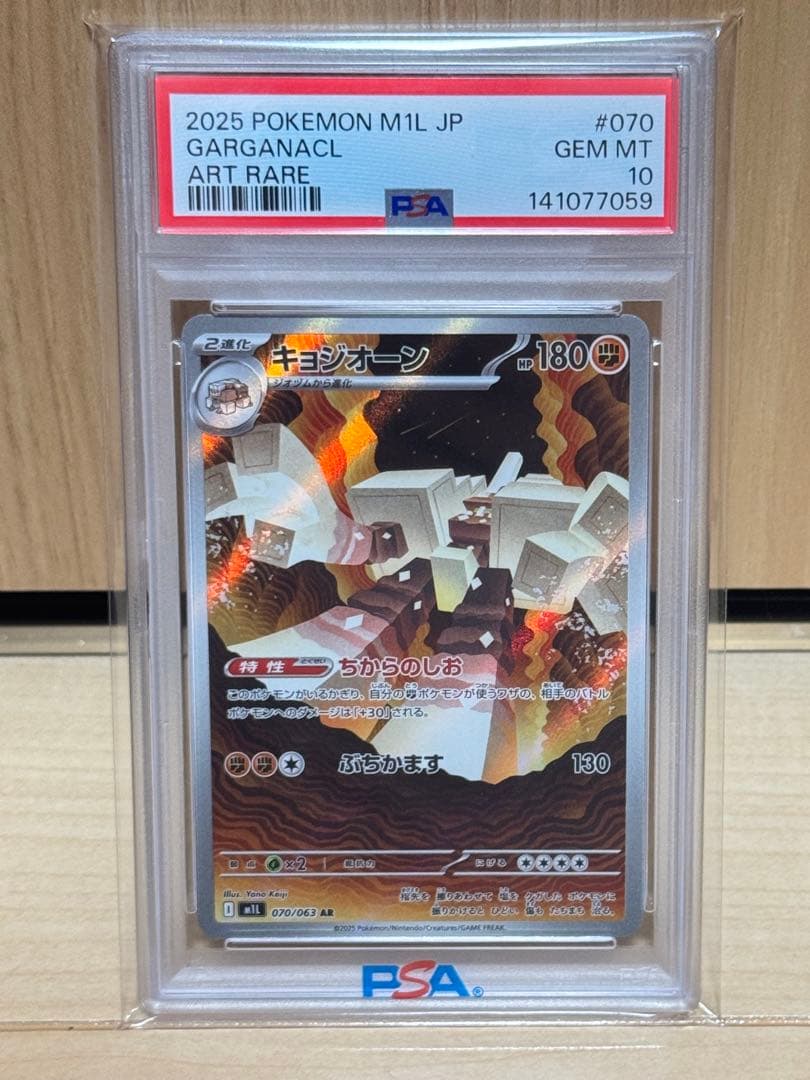
GARGANACL
m1l · #070 · Japanese
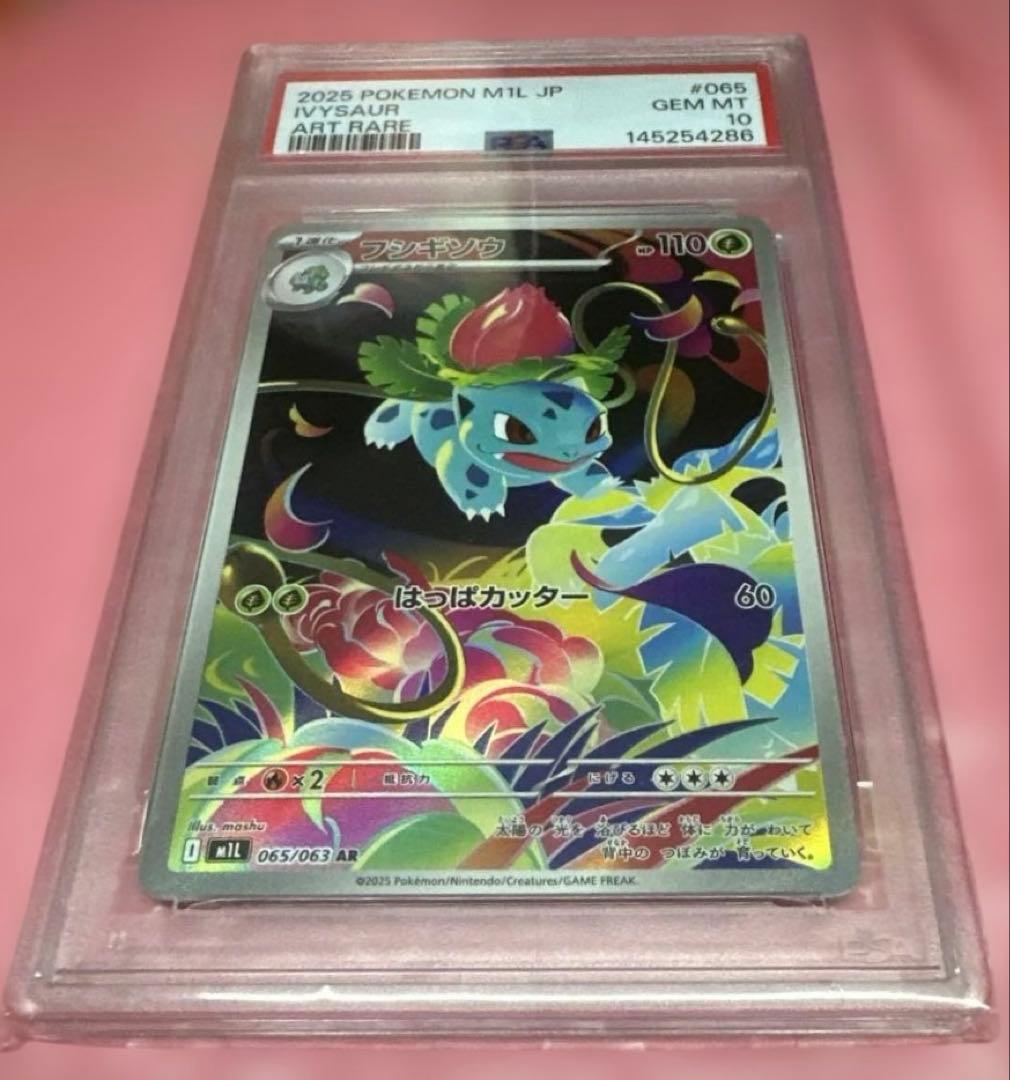
IVYSAUR
m1l · #065 · Japanese
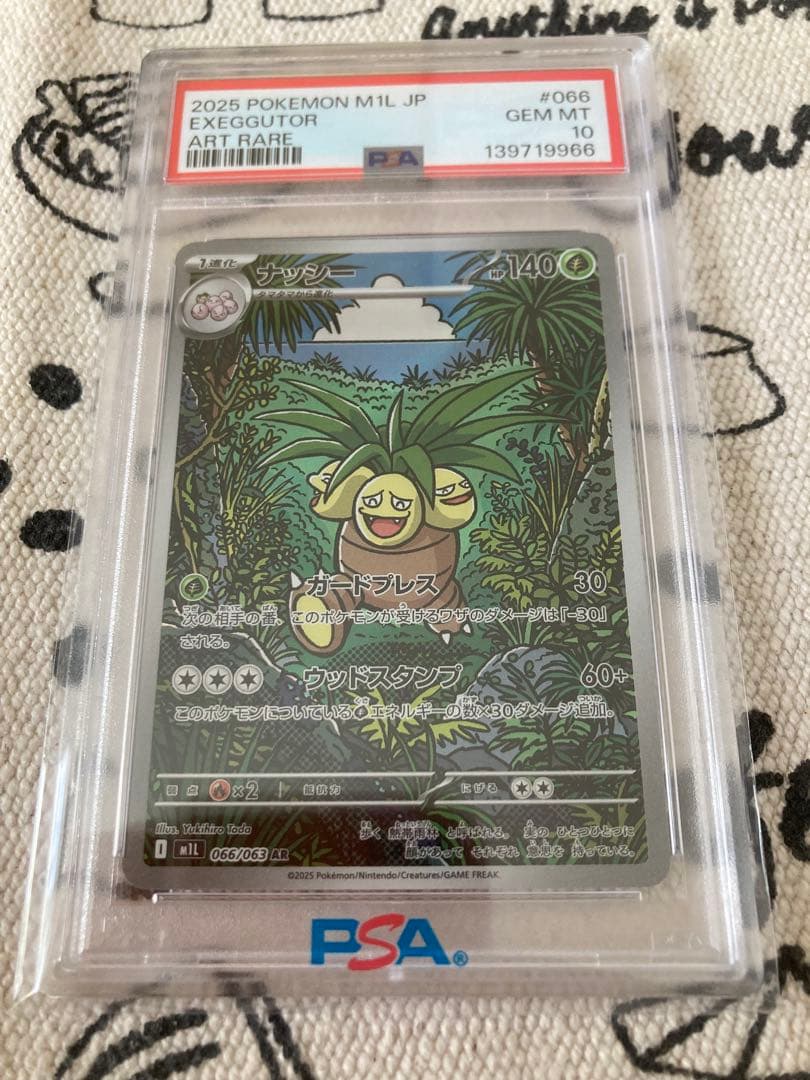
EXEGGUTOR
m1l · #066 · Japanese
Data Sources & References
- PSA grade & population: psacard.com/pop — authoritative PSA population report
- Japan market reference: snkrdunk.com
- US market reference: pricecharting.com
- Card image & metadata: Pokemon TCG API
Last updated: