Charmander PSA 10 Cards
ヒトカゲ · 小火龍
1 Charmander PSA 10 cards live · 0 in stock from Japan · prices 30-50% below US.
Charmander (#004) is the Kanto Fire-type starter that evolves into Charmeleon at level 16 and Charizard at level 36. As the entry point to one of the TCG's most lucrative evolutionary lines, Charmander cards command premium prices well above typical basic Pokemon. Iconic prints from Base Set (1999), Pokemon 151 (2023) and the original Vending Series remain core targets for collectors.
Charmander PSA 10 Cards
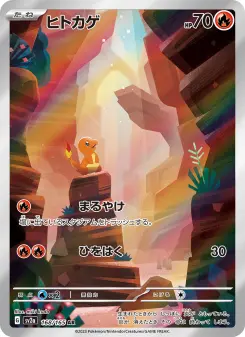
Overview
Charmander (#004) is the Kanto Fire-type starter that evolves into Charmeleon at level 16 and Charizard at level 36. As the entry point to one of the TCG's most lucrative evolutionary lines, Charmander cards command premium prices well above typical basic Pokemon. Iconic prints from Base Set (1999), Pokemon 151 (2023) and the original Vending Series remain core targets for collectors.
Lore & Background
Charmander is a Generation I Fire-type Pokemon introduced in Pokemon Red and Green (1996). The Bulbapedia entry classifies it as the Lizard Pokemon, standing 0.6 m tall and weighing 8.5 kg. Pokedex lore states the flame on its tail indicates its life force: it burns brightly when healthy and weakly when ill, and would extinguish if the flame ever went out. Charmander is one of three Kanto starter options offered by Professor Oak, alongside Bulbasaur and Squirtle, and serves as Ash Ketchum's third Pokemon in the original anime after being abandoned by its previous trainer Damian. Source: Bulbapedia accessed 2026-05-09.
Investment Analysis
Charmander derives most of its market value from being the pre-evolution of Charizard, the single most valuable mainstream Pokemon character in the TCG. While Charmander itself is a common-rarity basic in nearly every set it appears in, scarce variants such as the Base Set shadowless print, the Vending Series Glossy and modern alt-art treatments (Pokemon 151 Master Ball reverse, Obsidian Flames illustration rares) trade at multiples over face value. Charmander also benefits from sustained nostalgia demand from Gen 1 collectors, making PSA 10 graded copies of early sets steady long-term holds rather than speculative flips.
Buyer Guide
For investment-grade Charmander, prioritise Base Set 46/102 (1999) in shadowless or 1st Edition print runs, the Pokemon 151 (2023) Master Ball pattern reverse, and Vending Series Glossy. For playable nostalgia builds, Evolutions 9/108 (2016) and Pokemon 151 SV2a regular printings are affordable entries under typical retail. Avoid late-era promo Charmanders as resale liquidity drops sharply outside Gen 1 / 151 / Evolutions reprints. Always cross-check PSA pop reports before paying graded premiums; Charmander Base Set has a deep population and only Gem Mint commands true scarcity pricing.
Frequently Asked Questions
What Pokedex number is Charmander?
Charmander is #004 in the National Pokedex, a Fire-type introduced in Generation I (Pokemon Red/Green/Blue, 1996).
What does Charmander evolve into?
Charmander evolves into Charmeleon at level 16, then into Charizard at level 36.
Which Charmander card is the most valuable?
Base Set Shadowless and 1st Edition Charmander (46/102, 1999) in PSA 10 are the most valuable mainstream prints. Modern alt-art Charmanders from Pokemon 151 Master Ball reverse also trade at premium.
Is Charmander worth grading?
Grading is generally worthwhile only for Base Set, Vending Series, 1st Edition prints, or modern alt-arts in mint condition. Common reprints rarely justify PSA fees.
Does Charmander have a Pokemon 151 card?
Yes. Charmander 004/165 was reprinted in the Scarlet & Violet 151 set (SV2a, 2023), with Master Ball and Poke Ball reverse-holo variants alongside the regular print.